


Price and lead time
How much do custom cycling medals cost?
Custom cycling medals usually cost €1.65–€6.80 each for 100–1,000 pieces, depending on the medal type and quantity. A cast medal holds the shape of a chainring, the profile of a climb or the outline of your route. You can order from 50 pieces, the 3D design is free, and you should allow about 10 weeks with express delivery.
In short
3
medal types to choose from
50–100 mm
diameter
8–15 days
production
10–40 mm
ribbon width
Which medal fits your event?
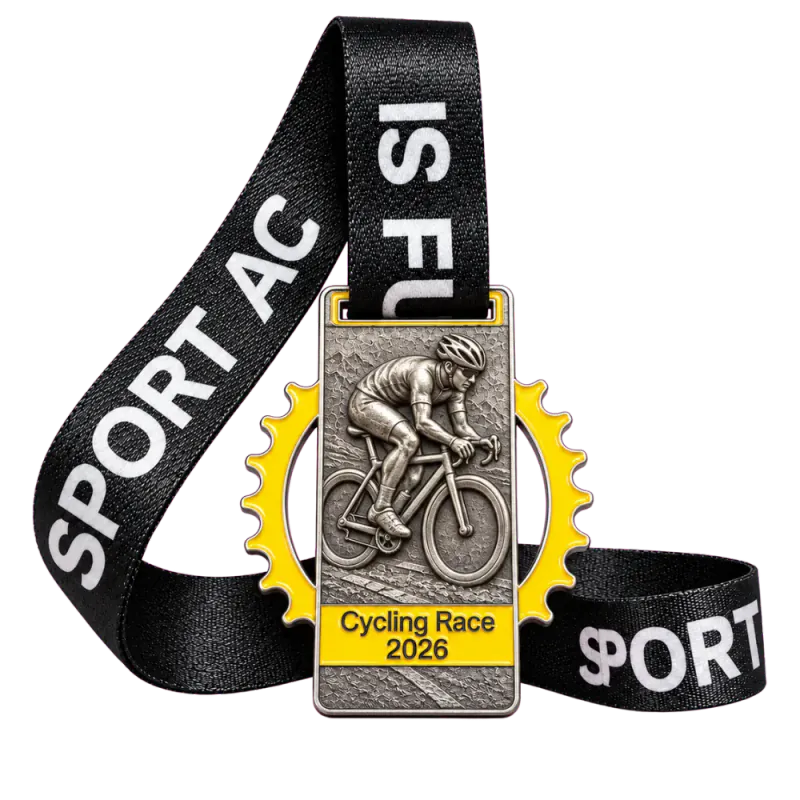
3D medals
Die-cast with sculpted relief — real depth you can feel with your thumb.
Relief
Sculpted relief, real depth
from €2.60 at 1,000 pcs
Learn more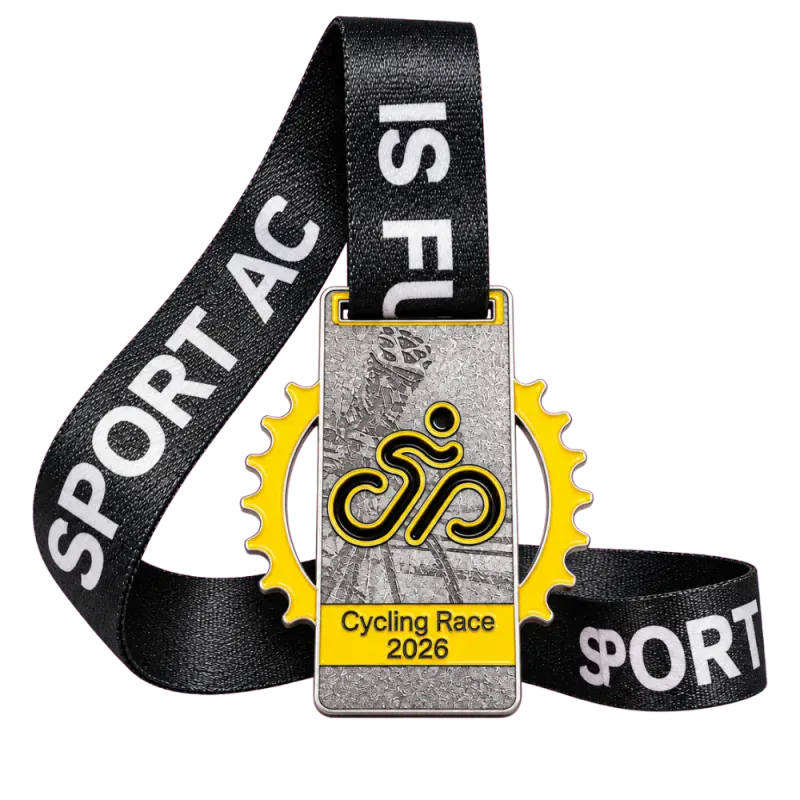
2D medals
Die-cast with colour enamel — flat raised levels, like a coin.
Relief
Two levels, sharp edges
from €2.40 at 1,000 pcs
Learn more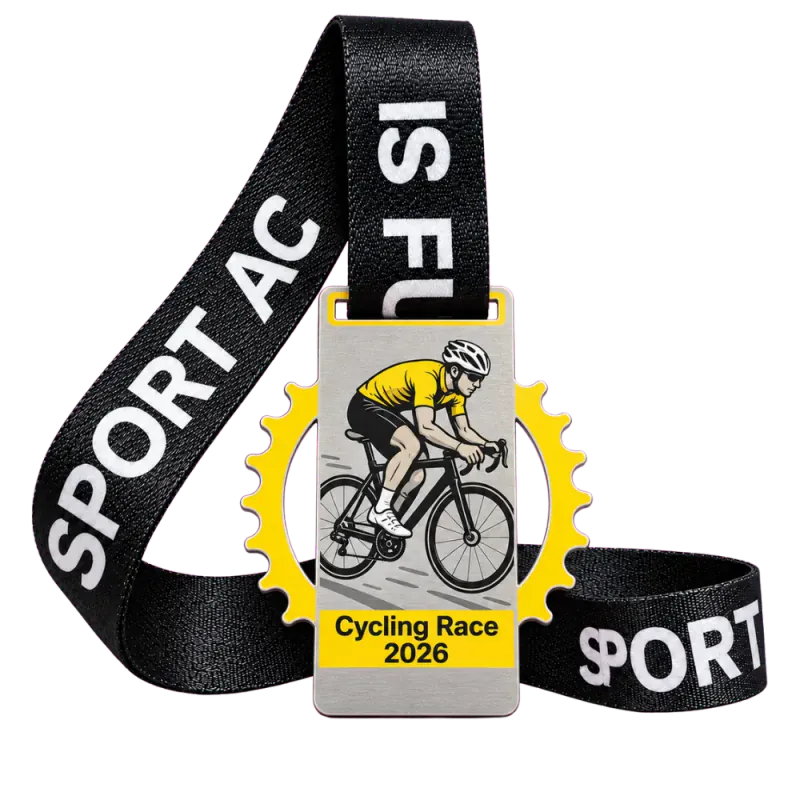
Printed steel medals
Laser-cut steel in any shape, full-colour UV print.
Relief
Flat sheet, no relief
from €1.65 at 1,000 pcs
Learn more| 3D medals | 2D medals | Printed steel medals | |
|---|---|---|---|
| Price per piece at 100 pcs | €6.80 | €6.00 | €1.80 |
| Price per piece at 1,000 pcs | €2.60 | €2.40 | €1.65 |
| Material | Zamak (zinc alloy) | Zamak (zinc alloy) | Steel |
| Thickness | 4.5–8 mm thick | 4.5–8 mm thick | 2–5 mm thick |
| Production time | 12–15 days | 12–15 days | 8–12 days |
Cyclists measure everything — grams, watts, kilometres — and they notice details the same way.
A chainring silhouette that actually matches a real ring, spokes you can see daylight through: that is the difference between a medal in a drawer and one hanging over the workbench.
Cycling medals, built around your route
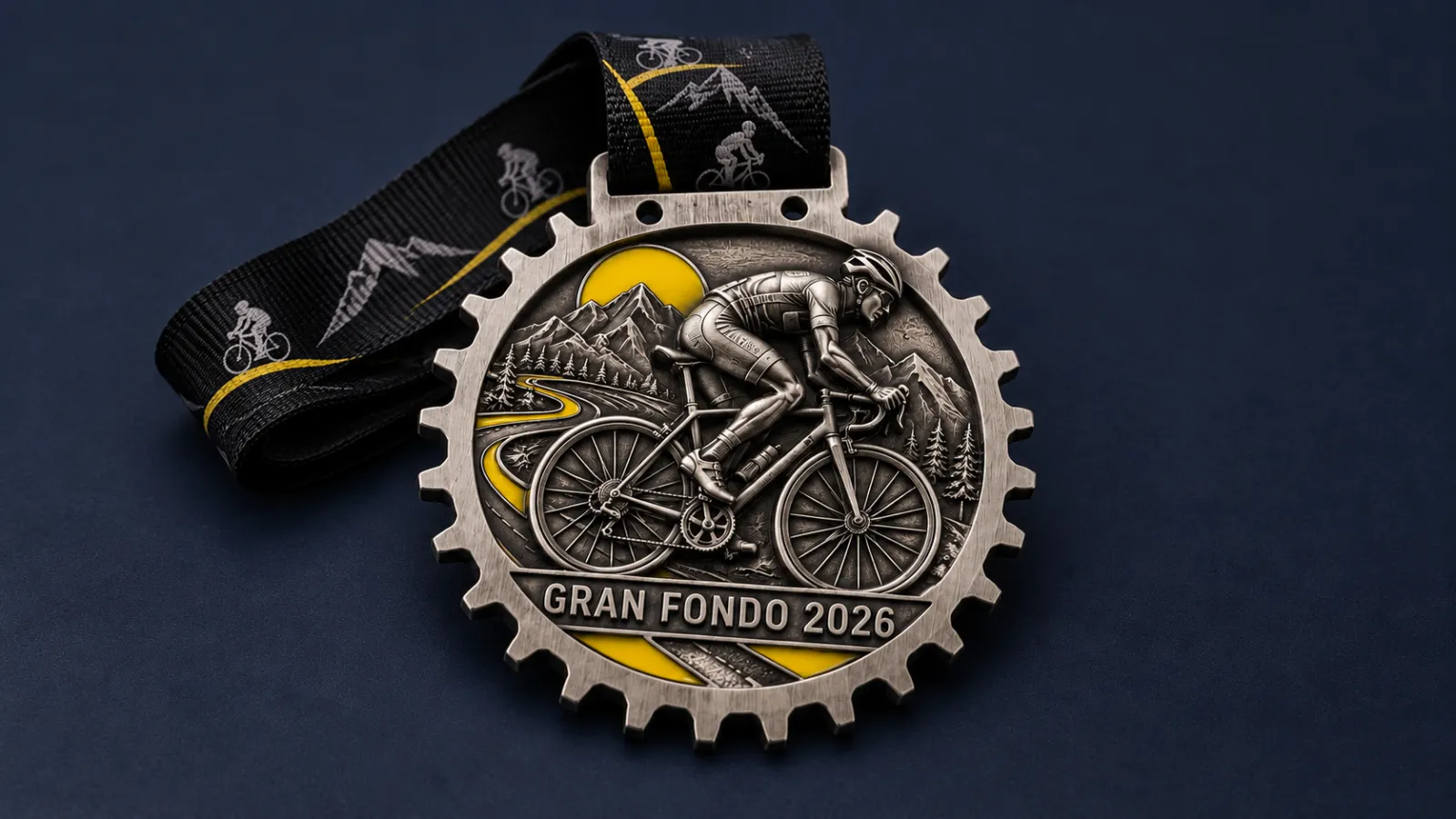
The finisher medal
The race name, the distance and the year, cast in metal. It is the first thing riders photograph at the finish.
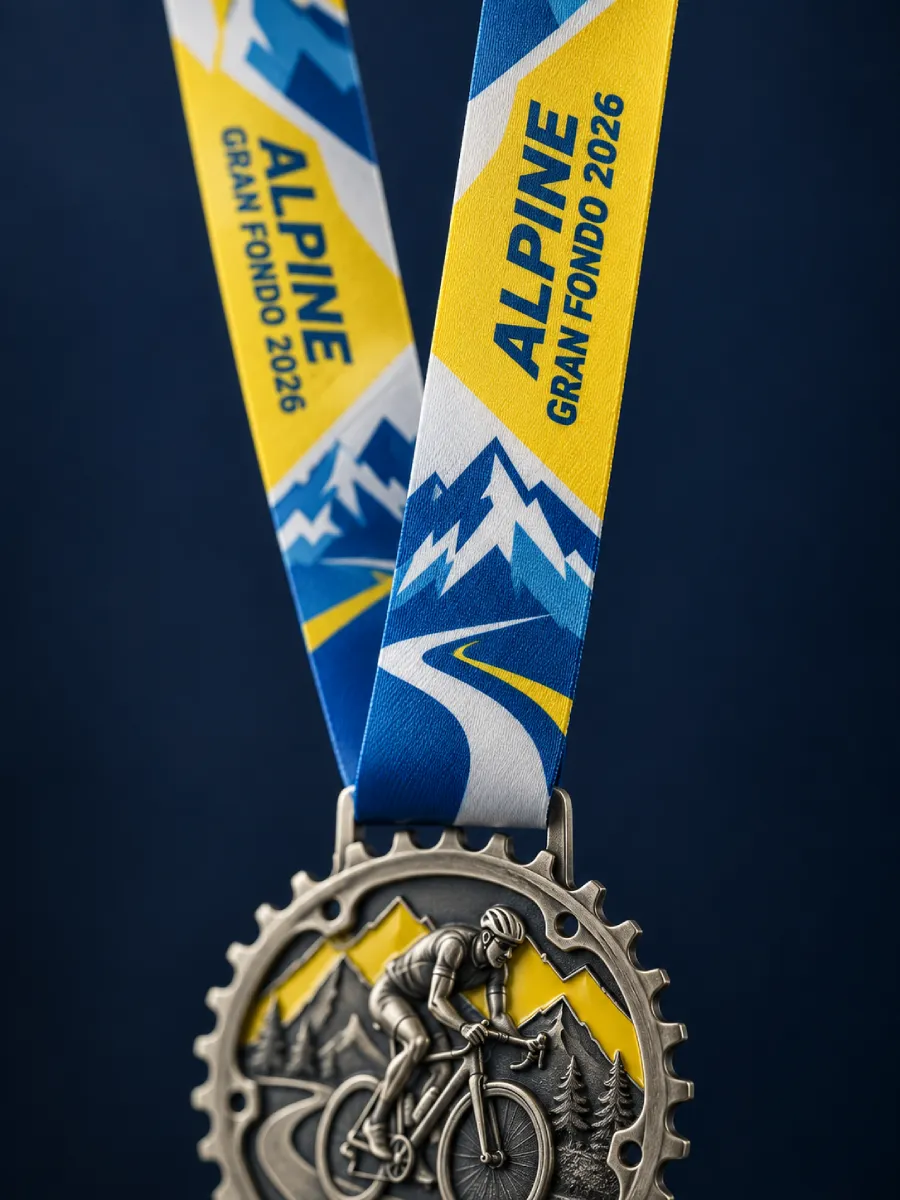
The race name on the ribbon
The name, the date or the sponsors along the ribbon — the part everyone sees in the podium photo.
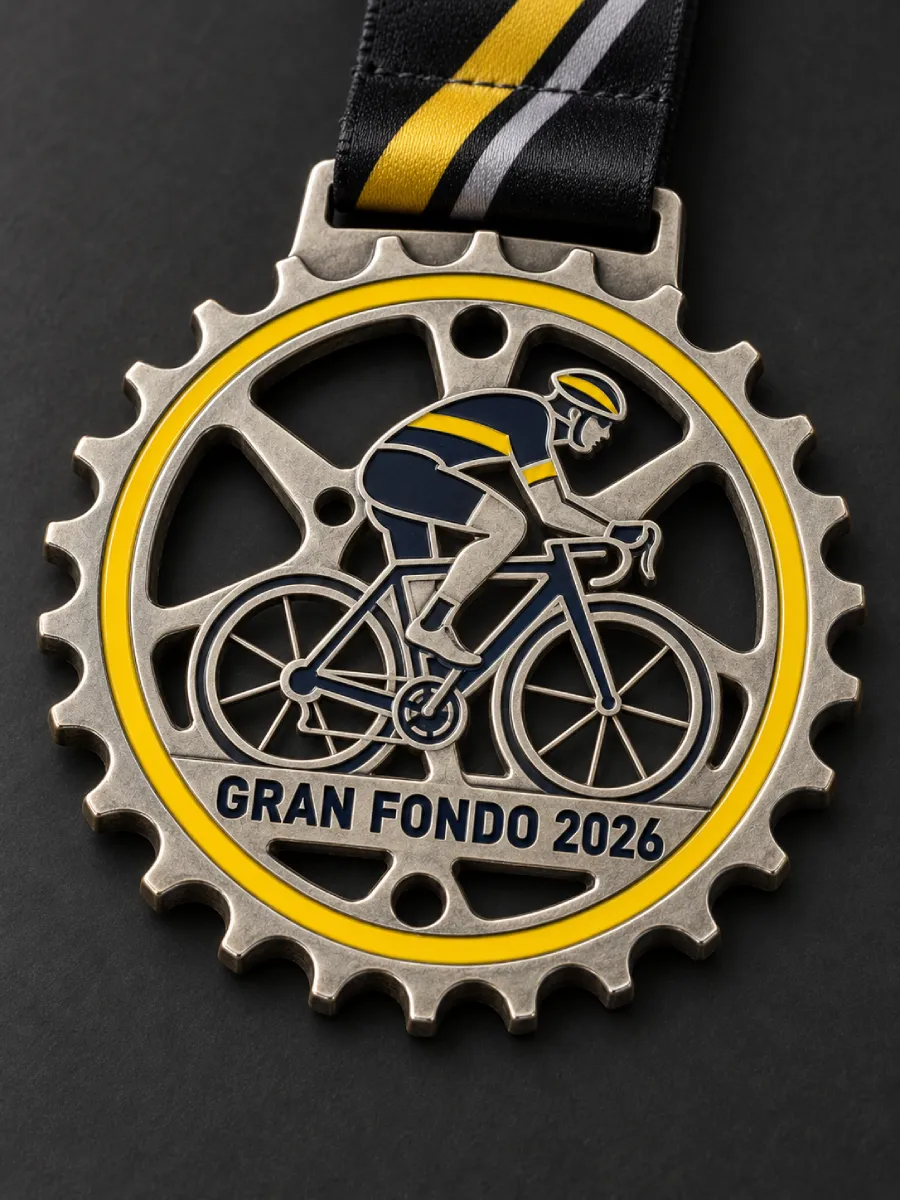
A chainring on a ribbon
Teeth, spokes and cut-outs come straight from the casting die, so the medal reads as a bike part before it reads as a medal.
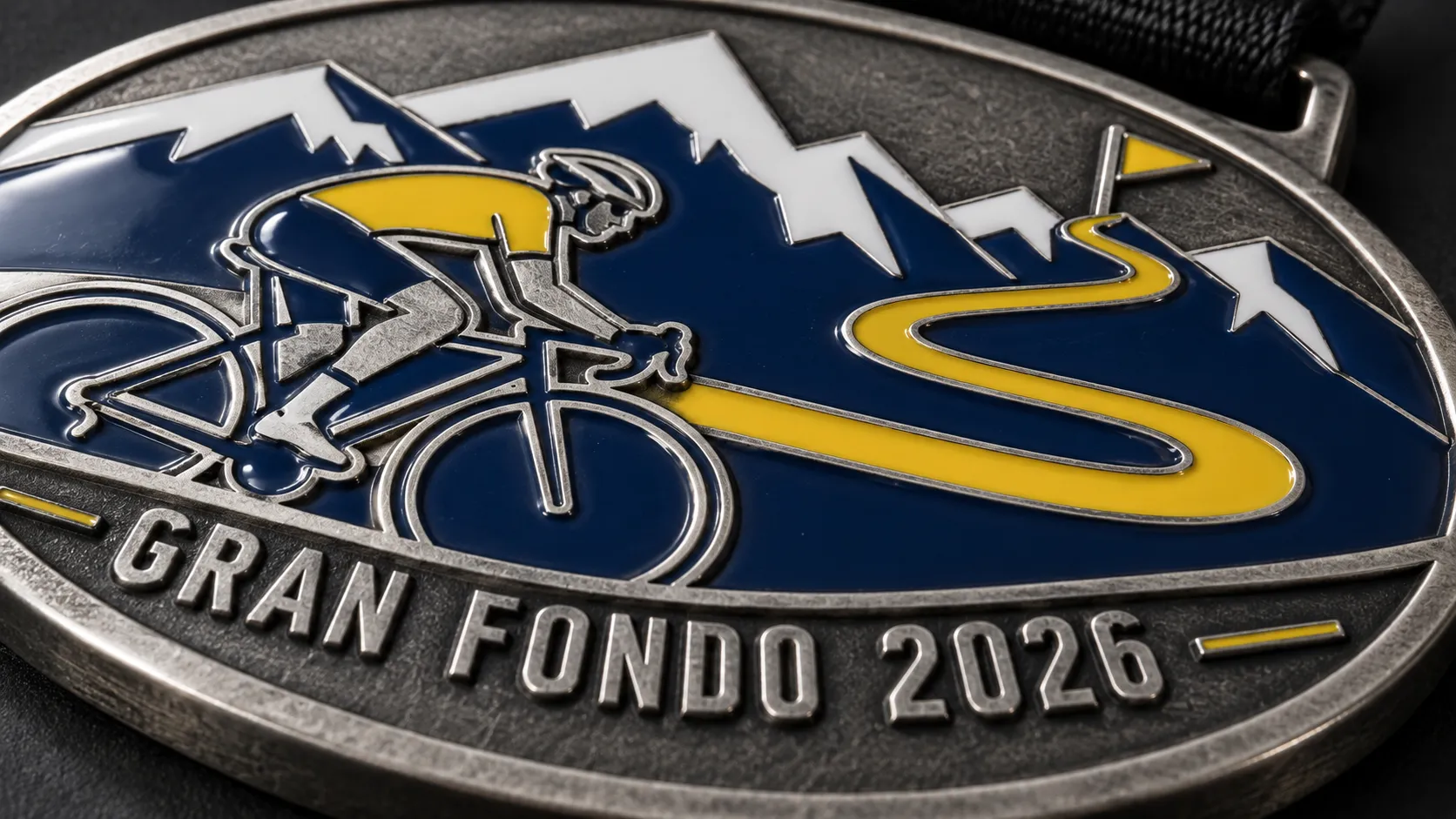
Your climb in relief
The profile of the hardest climb, raised across the face of the medal. Riders recognise the gradient before they read the name.
Medals for 50, 100, 150 and 200 km
A sportive with four routes still has to look like one event. Three ways to do that.
50 km
Biggest field, smallest diameter.
100 km
The distance most riders pick.
150 km
Fewer riders, a different finish.
200 km
The heaviest medal of the set.
- 01
One mould, four ribbons
The kilometres go on the ribbon, so every route gets its own medal without a second mould.
- 02
One mould, four finishes
Bronze at 50, silver at 100, gold at 150, antique gold at 200 — the medal grows with the route.
- 03
A medal per route
Every extra mould adds to the price, so most organisers keep the design and change the colour.
Medals for every kind of ride
Gran fondo and sportives
Hundreds of riders, four routes, one look — the event name cast into the metal.
Gravel races
The region's gravel loop as the outline of the medal, or a tyre tread cast into the background.
MTB marathons
A hard day out deserves weight in the hand: thicker metal and deeper relief.
Charity rides
Riders ask what the ride supports — put the cause round the rim of the medal.
Company rides
The company logo cast in the metal, one design for every team.
Race series and seasons
One design for the whole season, with the round number engraved on the back.
When is your event?
Choose the event date and delivery method. The calculation covers design, production, our quality check and delivery to you.
Frequently asked questions
Can the medal be shaped like a chainring?
Yes. The casting die follows any outline, so teeth, spokes and cut-outs are part of the medal rather than an add-on. The shape is paid once, together with the design.
How do stage-race or series medals work?
A shared series design with per-stage colourways from one mould keeps costs low; some series design medals that connect into one larger piece.
Gravel events in mud and rain — which finish holds up?
Antique plating or powder-coated steel — both shrug off dirt and moisture. Avoid high-polish finishes for muddy finish lines.
Tell us about your event
The date, a rough number of medals and a logo or just an idea are enough to start.