


- Names and logos come out sharp, not soft-edged.
- Colour goes only where you want it. The rest stays bare metal.
- The outline does not have to be a circle.
- Cut-outs can sit inside the design, not just around it.
Price and lead time
What do custom 2D medals cost?
2D medals are die-cast on two flat levels: raised metal lines and lettering stand above a lower background, and the recessed fields can be filled with colour enamel. As a guide, they cost about €6.00 per piece at 100 units and €2.40 at 1,000. Orders start at 50 pieces; production takes 12–15 days and you should plan around 10 weeks overall with express shipping.
In short
Shape
Any shape, casting die
Thickness
4.5–8 mm thick
Material
Zamak (zinc alloy)
Colour
Colour enamel
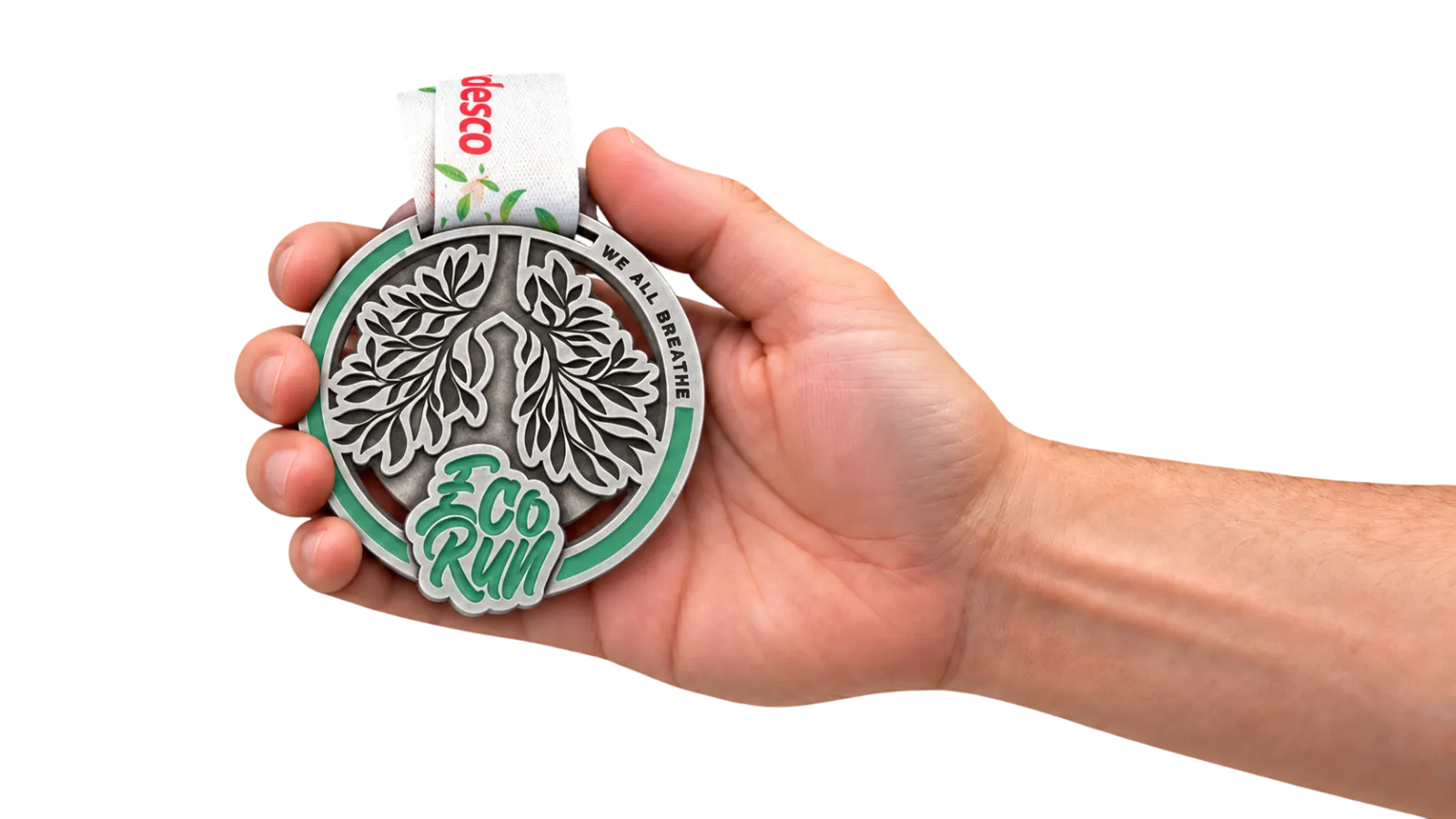
Flat colour, held by metal
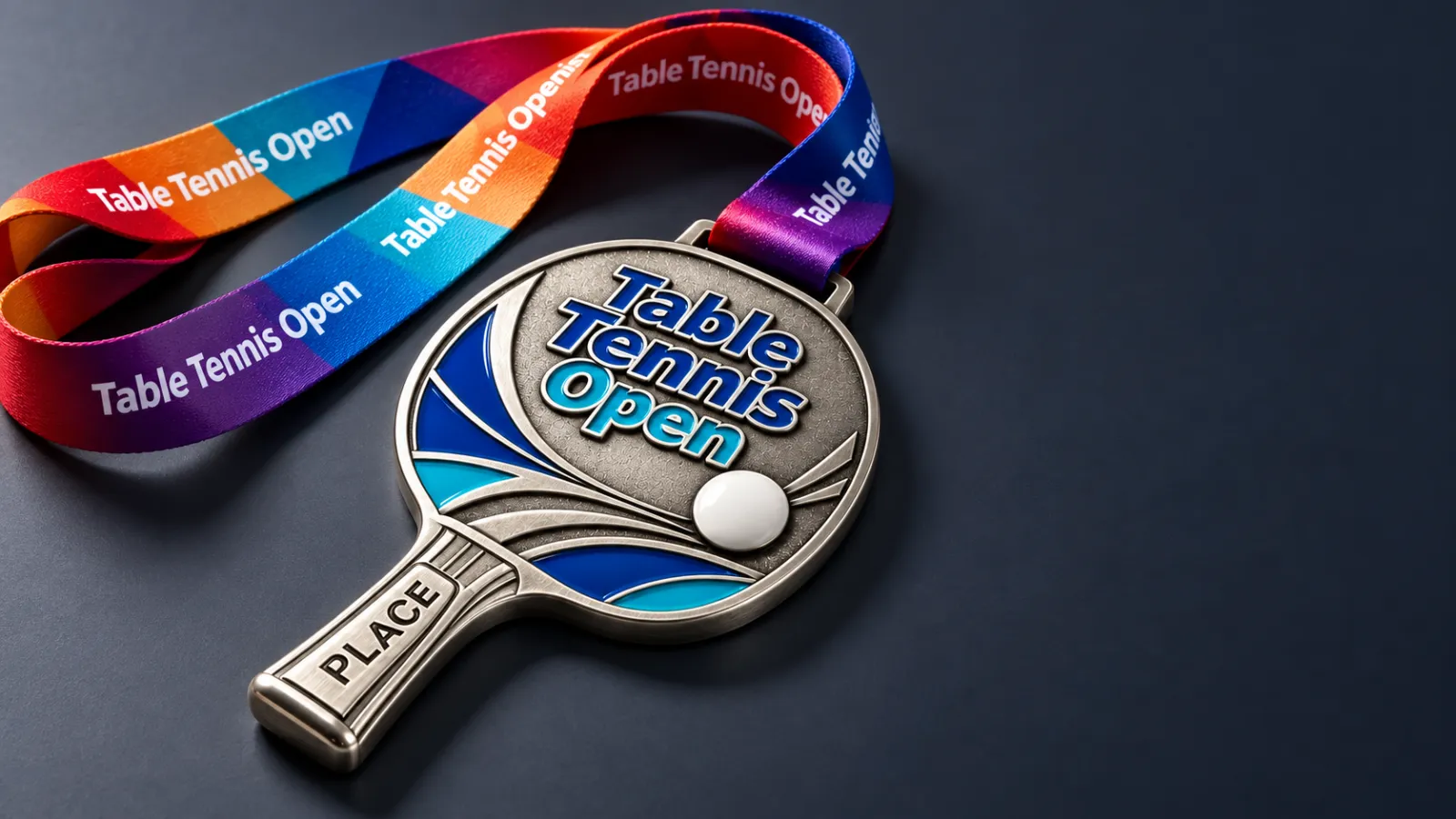
Any shape, not just a circle
The casting die is cut to your outline. A table tennis bat, a bib number, the silhouette of the route — whatever the design needs to be.
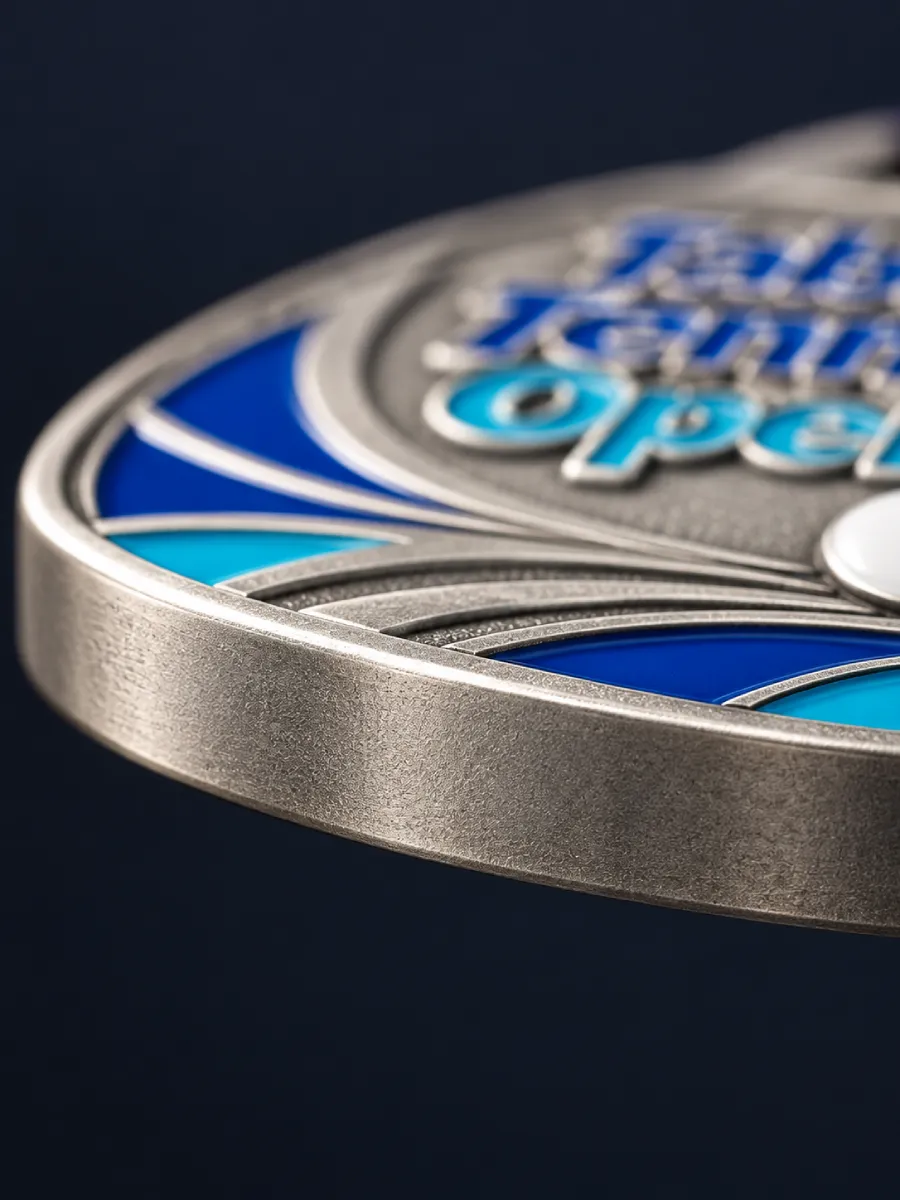
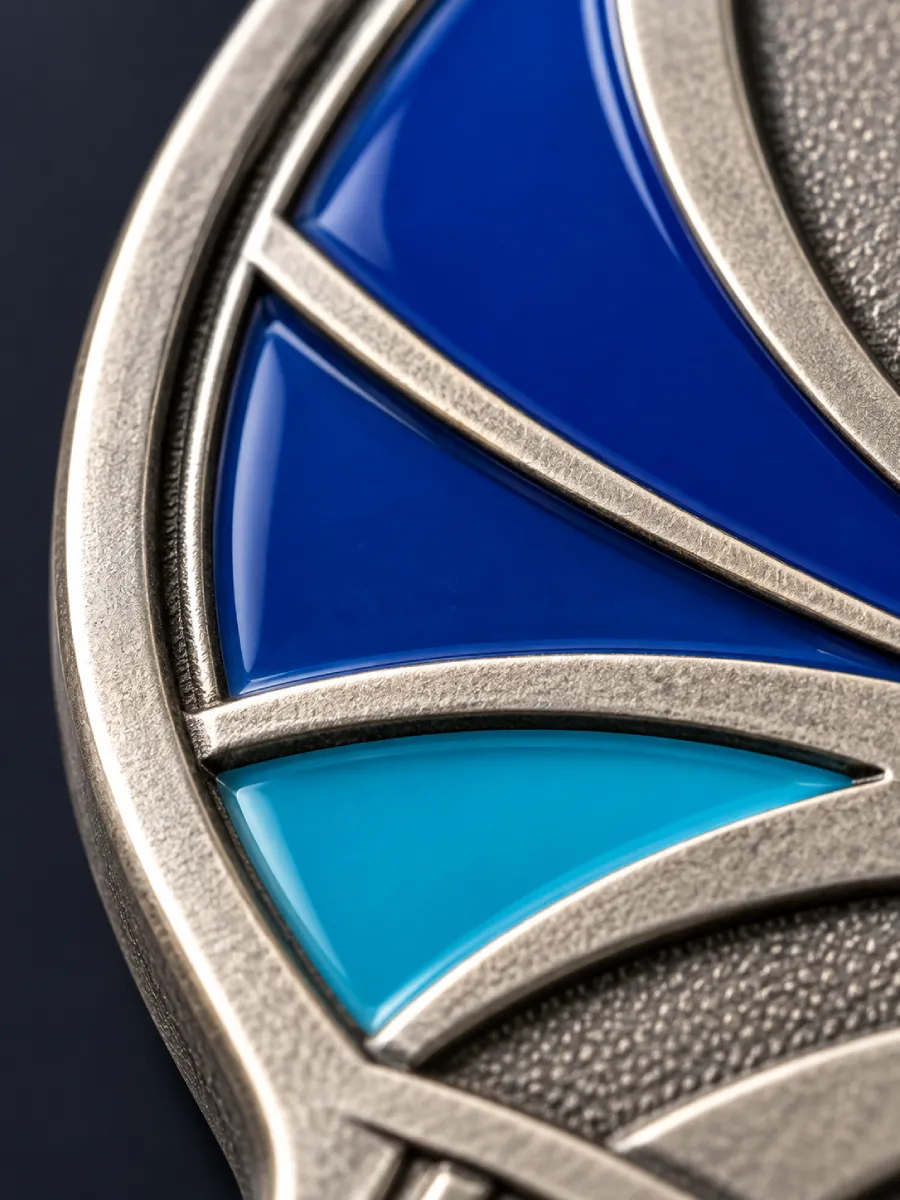
Colour fields, sharp metal lines
Each colour sits in its own recess, held apart by a raised metal line. That line is what keeps the edges crisp and stops one colour bleeding into the next.
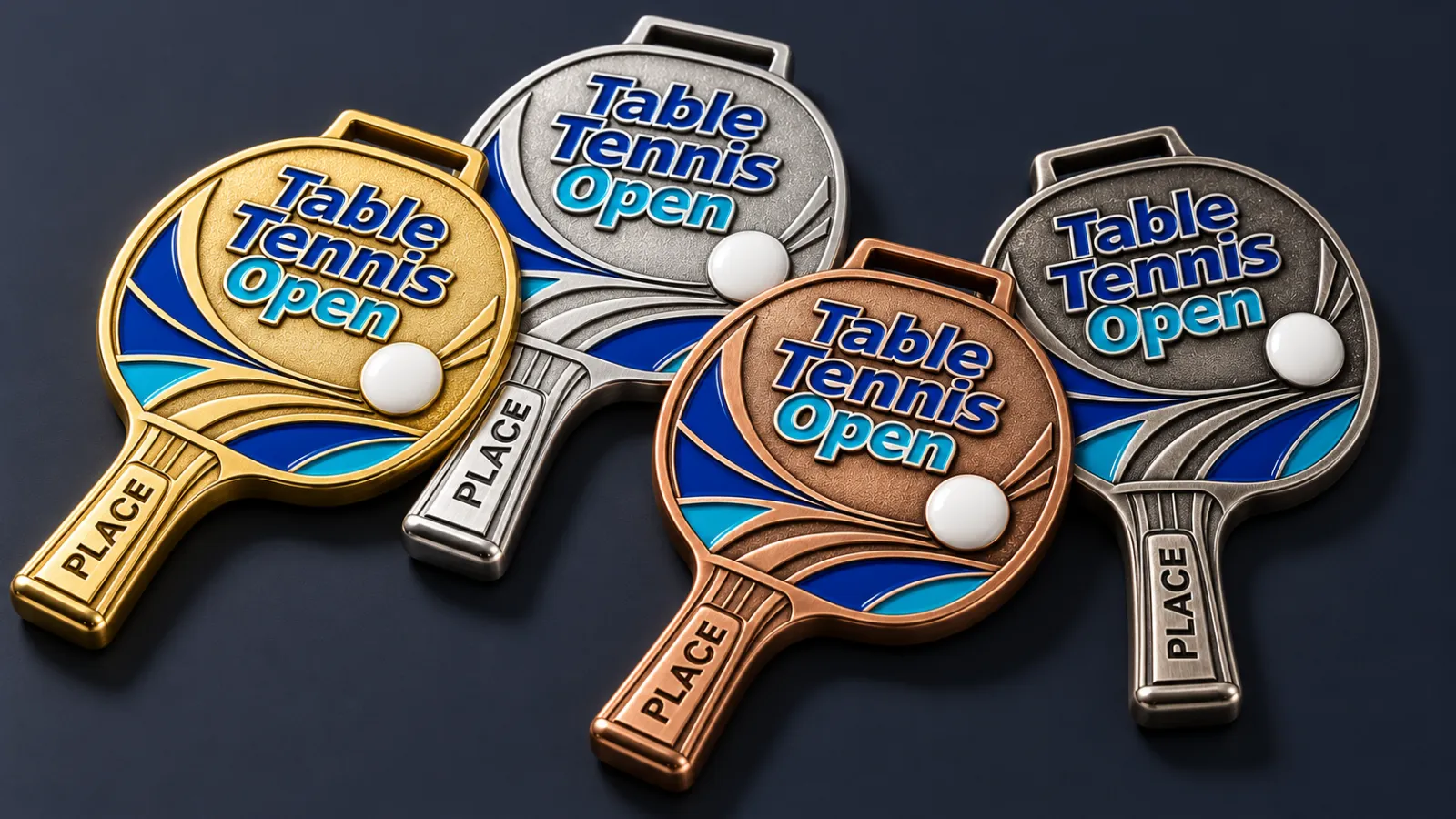
Four finishes, one design
Polished gold, silver, bronze, or an antique finish that settles darker in the recesses. The same die, four medals that look nothing alike.
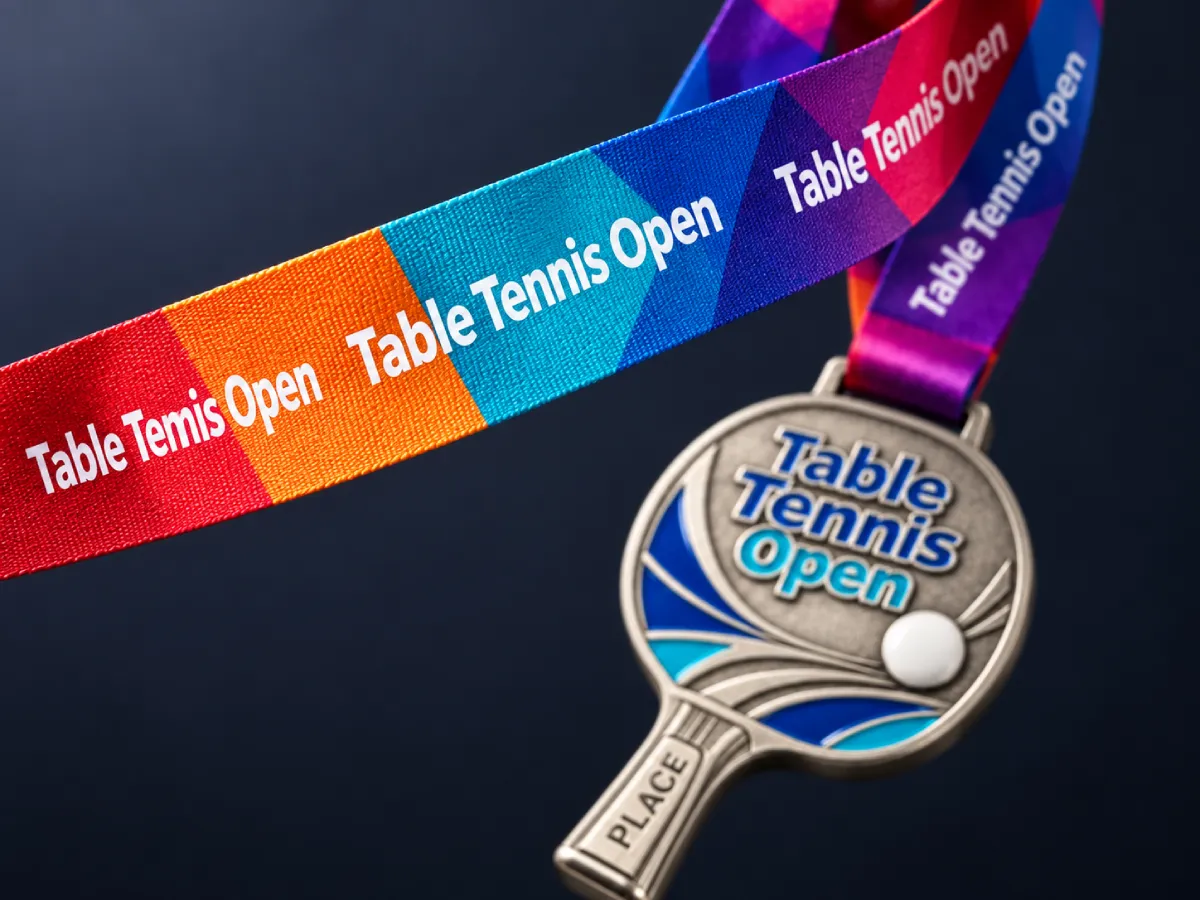
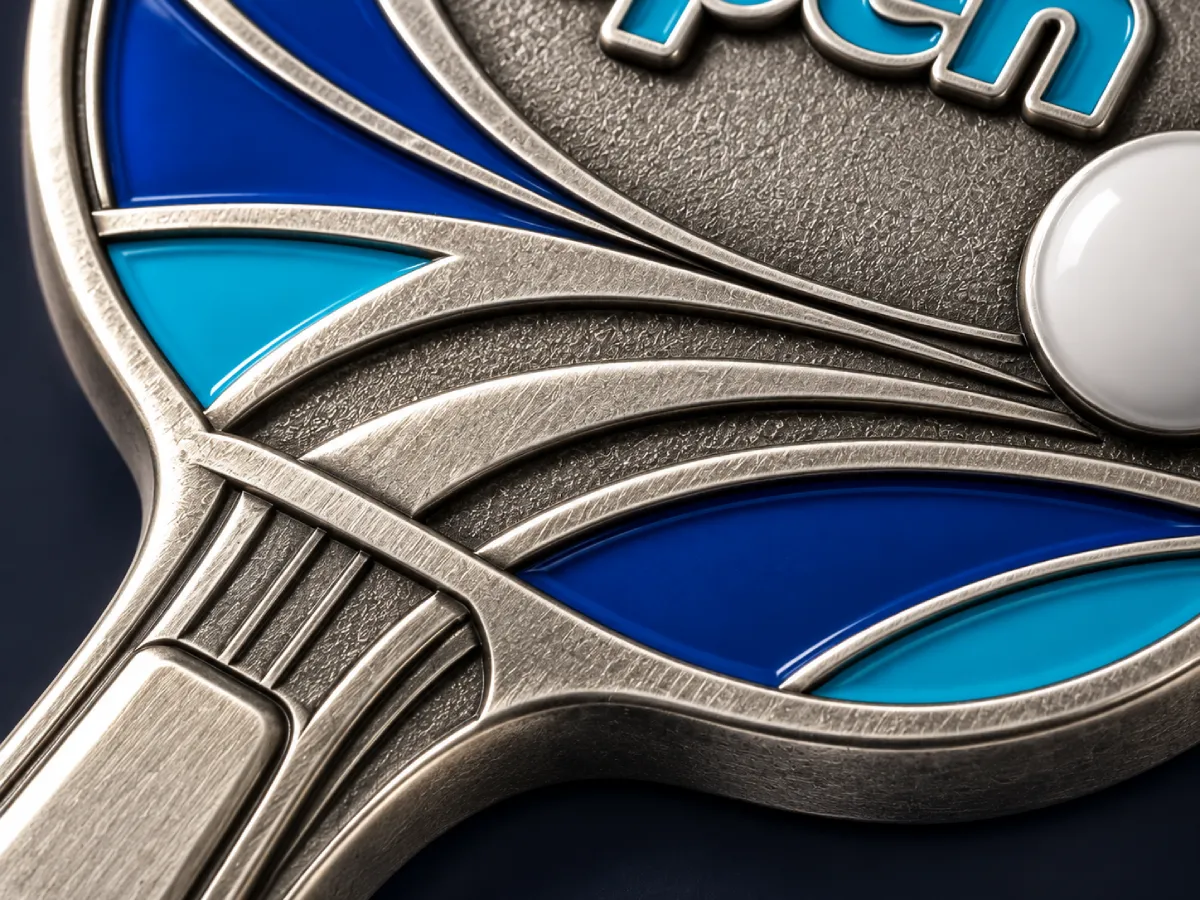
Start from what the finisher sees first. One main motif, room for the name, and everything else after that. A 2D medal does not need much decoration — the metal lines and two or three colours already do most of the work.
The colour goes in last
Casting comes first. The medal is then ground smooth and plated in the finish you picked. Only after that does the enamel go into its fields and get cured — which is why each colour sits slightly below the metal lines that hold it.

Step by step
What happens after you send the artwork?
- 01
Send the artwork you already have
A club logo, a poster, a sketch on paper. We tell you straight away which parts will work in metal and which need simplifying.
- 02
A version drawn for metal
Colours split into their own fields, lines thick enough to survive the mould. You approve that version — not the poster it came from.
- 03
The mould, and the first piece off it
Once the die is cut, every letter is fixed. That is why we ask you to read the whole design one more time before it goes in.
- 04
Casting, colour, ribbons
The run is cast and plated, the enamel is filled and cured, ribbons go on, and every medal is checked before it ships.
Frequently asked questions
How many enamel colours can a 2D medal have?
Up to six colours per side fit comfortably; each field is hand-filled and separated by a raised metal line. Pantone matching is part of the design stage.
Are gold, silver and bronze sets made from one mould?
Yes — one mould, three platings. You pay the mould once, split quantities freely across the three finishes, and the whole set ships together.
Will the enamel chip over time?
The enamel sits slightly recessed between raised metal lines and is heat-cured, so normal handling won't damage it — only a deliberate impact on a hard edge can chip a field.
Can a 2D medal carry a photo or a colour gradient?
No. Enamel fills flat fields, so a photograph or a fade from navy into light blue cannot be reproduced. A logo with a gradient has to be simplified into separate colours — or printed on steel instead, where full-colour artwork is no problem.
Can we send the file we used for the poster?
Send it — it is the best starting point. It will not go into the mould unchanged, though: colours that touch each other need a raised metal line between them, and hairline strokes have to be thickened. You always approve the version drawn for casting, not the original file.
What if we spot a mistake after approving the design?
Before the die is cut, any change is free. After it is cut, a wrong date or a misspelled name means reworking or recutting the die, because the lettering is part of the metal. Changing an enamel colour is a different job and usually still possible — ask us before you approve.
Why does a 2D medal cost less than a 3D one?
The die is simpler to make. A 2D die needs only two flat levels — the raised lines and the background — while a 3D die has to be sculpted with smooth changes in height. Most of that difference sits in the setup cost, so it shows most on smaller orders.
When is a 3D medal the better choice?
When the design lives in its shape rather than its outline — a face, an animal, a mountain ridge, a runner in motion. A 2D medal can show a recognisable drawing of them, but not their depth.
Let's get your design into metal
Send the artwork and roughly how many medals you need. You get a price and a version drawn for casting.